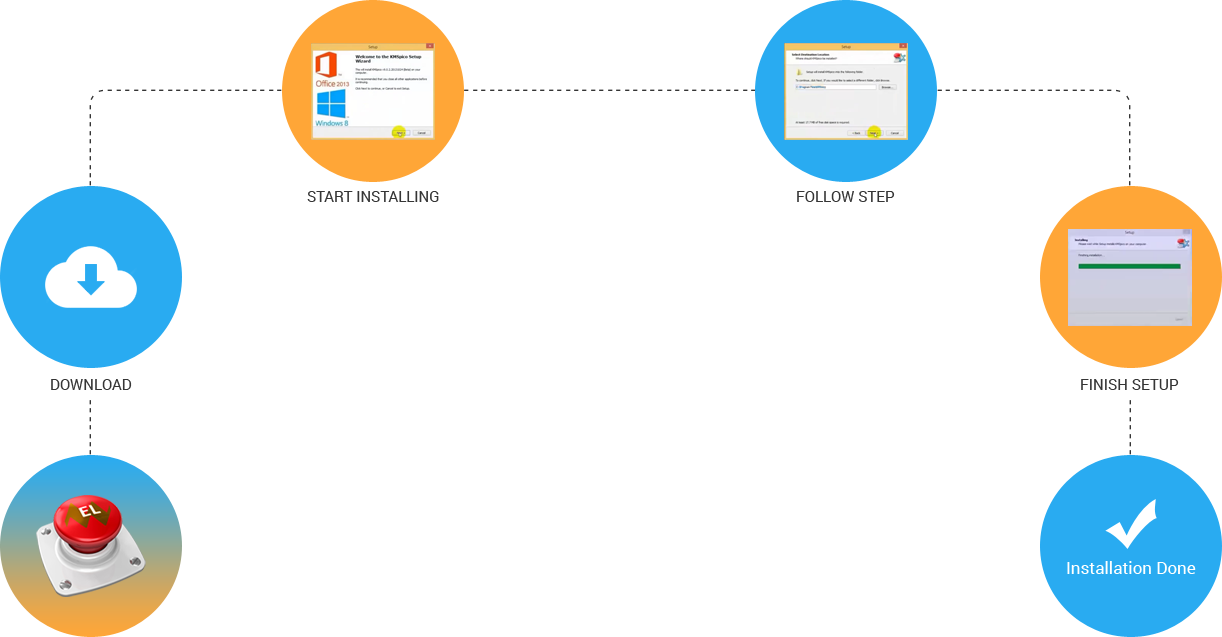
KMSpico is the most successful, frequently updated and 100% clean tool to permanently activate any version of Windows or Microsoft office within matter of seconds.
“KMS” (Key Management Service) is a technology used by Microsoft to activate software deployed in bulk (e.g., in a corporate environment). What KMSpico does is to replace the installed key with a volume license key, create an emulated instance of a KMS server on your machine (or in previous iterations of the software, search for KMS servers online) and force the products to activate against this KMS server.
KMS activation only lasts for 180 days after which, it must be activated again. However, by using KMSpico, an activation service is created which runs KMSpico twice a day to reset this counter.
GetKMSPico.com is in no way associated with Microsoft Corporation.

The ISO was rumored to contain more than just the game. It was said to have an integrated, self-evolving AI script that allowed players to manage their medieval kingdoms with a level of realism that blurred the line between simulation and reality. The First Fragment
Kael learned the truth: the ISO wasn't just a game. It was a distributed computing node. Sovereign-P2P had built a decentralized network hidden inside the game's engine. Every person playing the "pirated" ISO was actually providing processing power to a massive, hidden project—an attempt to create a truly "Sovereign" digital state, free from government surveillance and corporate control. knights-of-honor-ii-sovereign-p2p-iso
In the digital underbelly of the early 21st century, the name was whispered like a legend in the dark corners of IRC channels and encrypted forums. They weren't just a "scene" group; they were architects of the invisible. Their greatest masterpiece, however, wasn't a piece of software—it was the ghost of a game that never should have existed: Knights of Honor II: Sovereign . The ISO was rumored to contain more than just the game
The game launched into a breathtakingly detailed map of Europe. But as Kael played as the King of Bohemia, he noticed things were... off. The knights in his court didn't just have stats; they had memories. When he sent a diplomat to France, the AI didn't just calculate a percentage for success; it held a real-time, text-based negotiation that felt hauntingly human. It was a distributed computing node
One rainy Tuesday, Kael received a ping on a dead-drop server. The file name was a string of gibberish: KOH2_SOV_P2P_FINAL_v.1.04.iso . It was massive—nearly 200 gigabytes. As the download bar slowly crept forward over three days, Kael felt a sense of dread. The group that released it, Sovereign-P2P, had disappeared shortly after the upload.
Now you should know that the KMSPico v10 was great and the program can really help in activating the Windows 8/8.1. So, what is next? Yes…get the software and install it to the PC that you wish to be activated.